Friday, 19 November 2010

Pro: Three "Early memory" (Ideas)

I met my Uncle James and I held an interview with him to recall his past memories of growing up as a deaf individual.  I found his story very interesting, issues around his childhood and education were very interesting and not always positive.  His story progressed to him looking for work and his experiences of growing into adulthood. 
He also spoke of his experiences of taking part in the Bloody Sunday March.  From this he told me how he went on to meet his wife and how they went on to have four children. 

I found the story very interesting and began doing stretches to establish how I could present it in animation.  My first idea is to show a black dot on a white background, accompanied with music .  As the black dot opens out, it will move to become just a black outer line, with a white centre and will fill the screen.  In the centre, the person telling the story will become apparent.   No voice will appear on the film, sign language will tell the story. 

When the story finishes the screen will reverse its opening action and revert to a full black dot again.  It will reopen in the same way as before, with a full white screen developing, this  allowing the account of later experiences to be relayed. 

I will present this work, by the use of a black marker, no colour and all sketches will be black and white.  I have not decided on whether I will use Stop Motion or Photo Shop in this project yet. 

My second idea of how to complete this project is by using Stop Motion.  I would have a black board and then I would clip out the scenes in white.  Each time I would make a movement I would take a photograph.  I will use a mixture of colours, black, white and red to depict the story of Bloody Sunday.   The red, being used to depict the dramatics of the day.  

My third idea will begin with a crumpled up white piece of paper which will slowly open to reveal the animated characters.  The last scene will end with the paper again becoming crumpled and ripped up, moving around the scene.  The shredded paper will be used to highlight his return to Derry, and his realisation that while he has been aware unrest has developed within the province. 

The crumpled piece of paper will now disappear and return as a whole new sheet of white paper, this will signify the further development of his life, his marriage and subsequent birth of children.  The process used in this activity will again be photo-shop or stop motion. 


My fourth idea involves a white background, with 2 lots paper ripped and rolled. The animation is covered in one roll paper and as it un-roles, the story will begin. On one side the animation will develop and on the other side, the text will un-role.  
The next scene will be of a piece of paper which will dramatically rip unevenly on the screen, this will depict the notion that something devastating has happened.  
At each stage of the story the screen will revert to a clear page and this process will finally end with the piece of paper becoming crumpled and the words, ‘The End,’ appearing in the middle of it in black..  I may include text in this activity and if I do it will be developed through the computer or photo shop, however, the overall process used will be Stop –Motion. 


Pro: Two Final:

Sunday, 17 October 2010

Art Deco Posters (Pro:Two Research)


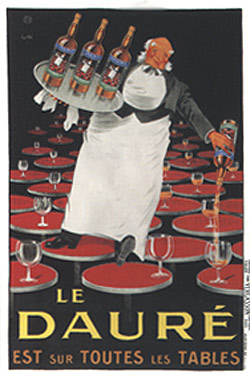
My research of Art Deco highlighted to me how these Artists used sketches to produce their work rather than the use of photographs which floods the contemporary scene.
Art Deco (1910-1939) originated from the ‘Exposition Internationale des Arts Decoratifs Industriels et Modernes,’ held in Paris.  This was a follow-up of the Art Nouveau style but brought a more simplified version that was closer to mass production. 

Art Deco was a elegant design style dominant in decorative fashion, jewellery, textiles , furniture, interior design and architecture.

Artists of the time included Tamara de Lempicka, Rene Lalique, Erte and Adolphe Mouron.  Examples of Art Deco Architecture can be found in New York in the form of the Chrysler Building and the Empire State Buildings.  The Empire State Building, designed by William Van Alen, is considered to be one of the world’s greatest Art Deco Buildings.
Art Deco became a showcase of modern society throughout the world and for the first time, styles became international.  Its sense of modernity, as its simple and elegant style has proven itself through time.

Art Deco Posters
After World War 1, Art Nouveau’s organic inspiration seemed irrelevant in an increasingly industrial society.  New realities were better expressed in the modern movements of Cubism, Futurism, Dada and Expressionism, all which would have a profound and lasting influence on graphic design.
In the Soviet Union the Constructivist movement told hold in the 1920’s, creating a new technological society which moved on from the Suprematist Movement and developed an agitational style of work, marked by strong diagonals, photomontage and colour.  These constructivists including Lissitsky, Rodchenko, Klutis and the Stenbergs would have a major impact on Western Design.  We now had a new decorative international movement called Art Deco.  This came about by the introduction of machine power which allowed for speed and style.  Shapes became simplified and streamlined with curved letterforms replaced by angular ones.


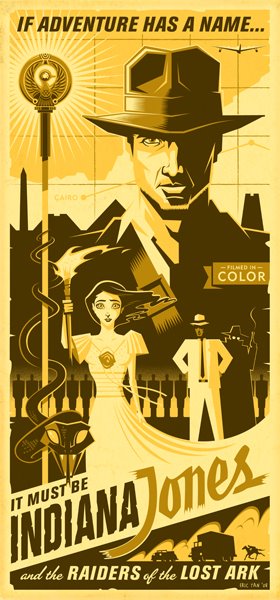
Eric Tan (Pro:Two Research)

This graphic designer is from San Diego.  His Art Deco work has been used by Disney. 


Pro:Two - Water is Life.

I used Art Deco as an influence in the design of my poster.  The colour I choose to predominate this poster was blue, in its various shades, as for me, water is blue.  I came up with different designs which suggested ‘water’ to me i.e. a tap, bucket, person, river and the country of Africa.  The next step in this project was for me to choose my best design for my poster and to consider the format that this should take.  I decided that I would use the Art Deco format of an image in the middle of the poster with writing at either end.  The message at the top of the poster could be something like, ‘Save Water, Save Life’ or ‘Hope Water, Safe Life’.  The message at the bottom would be the title of the project, ‘Water is life’. 


I am an egg. I am your client


Saturday, 16 October 2010

Pro:One Paramedic assist

This piece of equipment has been designed for paramedics to use with patients who have difficulties in the area of speech and sound. 
Currently if a paramedic arrives at the scene of an accident with such a patient they find it very difficult to find out what pain the individual is in and the extent of the pain etc.

This piece of equipment has been designed to reduce such difficulties allowing the patient  to point to visual images of body parts, type of pain and type of injury. 
This piece of equipment will be made of plastic to ensure that it is waterproof.  It will be 21cms x7.5 cms x 2.5cms in size and be light weight.  A lid will be fixed to the top of the equipment which when lifted will allow a light to come on.  This will ensure that it can be used in dark situations. 
The first plastic page that the patient will see will contain words and images of the following: Hurt ( flashing red-Image of a hand with blood on it), Broken (flashing green- image of a broken bone), Poison(flashing yellow-image of skull and cross bones) and Burn(flashing blue-image of fire).  The patient will be shown this card and will point to their particular problem.

When the paramedic has discovered the patients particular area of difficulty they will then turn over the plastic sheets till they come to a comprehensive description of the problem. 

For example, if the patient says that they hurt, the paramedic will use the associated colour coded ends on the first card to reach this area quickly.  

This will then present the patient will images of body parts (which will also be named) allowing the patient to point to their particular injured body part.  This will allow the paramedic to discover without language the patient’s difficulty. 


The comprehensive section on Poison will not contain body parts but images of items which could have caused the potential harm.  For example, plants, food, alcohol, drugs, household cleaners and animal bites.